

















 Loading...

There are games out there that don’t try to wow you with a flashy hook or a complex story, but rather focus on nailing one simple mechanic, and these games tend to shine in the big, colorful world of online puzzle games. That’s the type of game you get with Candy Match Master, which you can play right now on platforms like GamePix. This is a pure, undiluted celebration of the match-three puzzle, distilled down to its most elegant and demanding form. No frantic countdown timers, no complex side-quests, and no pressure to spend money in the game. You, a board of shiny candies, and a finite number of moves to a certain, often devilishly difficult, goal.
The purity of design is the game's greatest strength, and its deepest challenge. Without a ticking clock the pressure shifts entirely from speed to efficiency. Everything you do must be counted as something. A wasted swipe is more than a second lost, it's a permanent reduction in the chances you have left to solve the puzzle. This guide is your all-in-one training manual whether you are stuck on a mathematically impossible level, struggling to understand how to effectively create and deploy special candies, or just want to take your game from casual luck to calculated mastery. We’ll take apart the mechanics, get into the philosophy of move efficiency, explore the deep psychology of the turn-based puzzle, and turn you into a true candy-matching master.
Getting Into The Dojo: A Pure Puzzle, Initial Thoughts
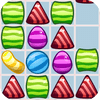
From the moment the game loads, there is a sense of calm focused challenge. The board is a static grid of colorful, well-defined candies, seen as a whole. The UI is clean and informative, showing your target score, your remaining moves and the specific objectives for the level, whether that’s clearing a certain number of specific candies, dropping items to the bottom of the board or shattering a hardened candy shell. The happy, soothing soundtrack is not an urgent one. It is not a time to panic, but to think.
This is the first and most important adjustment for a new player, psychologically. Come to Candy Match Master from a fast-paced, time-pressured blitz game and your first instinct is to swipe fast, to keep a rhythm of constant matching. You have to consciously fight this impulse. Speed is not your friend in here, speed is the enemy of precision. You don't have to be fast at this game. It is asking you to be correct. Play your first few levels slow, slow, slow. Deliberately slow. Almost exaggeratedly slow. Before you make each move, run your eyes over the whole board, not just the obvious cluster of three reds. This is not a race. This is a chess game with candy. The board is a static problem that needs to be solved and you can take as much time as you want to find the most elegant solution.”
The initial levels are a gentle tutorial, a safe sandbox to unlearn your need for speed and develop a new habit of analytical observation. You’ll notice the feedback loop of the game is tuned differently. The satisfying pop of a match remains, but the reward signal is now the progress bar moving toward its goal, the visual indicator of your dwindling moves replaced by measurable progress. A move that feels good but doesn't get the job done is a trap, a sweet poison. The first step on the road to mastery is to redefine what a “good move” feels like. The best move is not the one that matches the most candies. The good move is the one that best moves you toward your main goal and also opens up possibilities for your future moves.
Special Candies as Precision Instruments in the Strategic Lexicon
In a game where each move is a finite and precious resource, special candies are not just exciting bonuses but essential tools to reach the level goal within the move limit. They are not made by luck, they are made by observation and manipulation of the board. The core curriculum of Candy Match Master is to master their creation, and more importantly, their strategic deployment.
Match four in a row to create the Striped Candy, your most versatile workhorse. Its power lies in its directionality and surgical precision. A bomb clears a radius, a striped candy is a scalpel, clearing a single, perfect line across the entire board. The strategic value of the system is that it can reach far goals. The horizontally-striped candy on the correct row is your immediate, efficient solution when you need to collect cherries that are stuck in isolated corners. To clear a column of stubborn, multi-layered blockers, a vertically striped candy is the key. A master won’t just make these candies, but will observe the direction of their stripes closely before sending them on their way, and will try (if possible) to steer them through subsequent matches to a row or column where they’ll be most effective.
Your explosive area of effect weapon is the Wrapped Candy created by a match of T or L shape. With double-blast radius, it's perfect for clearing dense bunches of obstacles, or taking out some localized problem. If you have a level with a big, heavily-armored block of frosting in the middle, surrounded by normal candies, then one wrapped candy exploding next to it can do in one move what it would take three or four individual matches to do. The wrapped candy is an example of strategic depth that is fully realized when you combine it When a wrapped candy hits a striped candy, it will cause a big cross explosion, clearing three rows and three columns. This is a board changing event, that can instantly collect multiple objectives, shatter complex obstacles and trigger a cascade that can deliver your target score with one brilliantly planned move.
Matching five in-a-row creates the glimmering crown jewel of the puzzle world, The Color Bomb. Its power is transformational. Swap it with a candy to remove all candies of the same color from the board. There are lots of strategic uses. If you want to collect a specific color then the Color Bomb is a fast completion tool. If a color is acting as a logistical blocker, preventing other, more desirable colors from cascading into a critical area, a Color Bomb can be used to surgically remove a whole color population and fundamentally reshape the board state. This combo is the pinnacle of Color Bomb strategy. Combine a Color Bomb with a Striped Candy and all of that color turn into Striped Candies and instantly activate, triggering a symphony of laser-like clearances that can single-handedly win a seemingly impossible level. The ultimate expression of strategic patience and foresight is to create and hold a Color Bomb until you can use this combo.
The Philosophy of Move Efficiency: Making Sure Every Swipe Counts
The philosophy of move efficiency is the single, unifying principle that separates a struggling novice from a Candy Match Master. This is the cold, calculating understanding that you have a depleting wallet for your remaining moves and you have to get the most objective progress possible for every coin you spend. Inefficient, wasteful moves. These are the flashy moves that clear fourteen candies but don’t chip away at a blocker or collect a required item.
This philosophy requires an audit before the move. First you have to ask yourself a quick series of internal questions before your finger carries out a swipe. “What’s my main goal?” Your answer needs to be specific: not “get points” but “get 20 red candies and clear all the jelly.” “Does this move directly get me closer to that goal?” If the move is a match of green candies far from the jello, the answer is no. “Does this move indirectly get me closer to my goal by creating a special candy or setting up a future cascade?” This is where the nuance comes in. A move that doesn't hit a target directly can still be efficient if it creates a striped candy that you can immediately go for on the next turn. Finally, “Is there a move on the board that better advances the objective?” This last one is the killer of the impulsive swipe. It makes you scan the whole board and compare opportunities. Often the most obvious, largest cluster is not the most strategically valuable move. An efficient move could be a small three-move in a corner that lines up a four-in-a-row for your next turn perfectly.
This leads to the vital skill of thinking in "two-move sequences." Novices think one move at a time. The masters think in twos. Your current move and your next move are one connected strategic unit. A two-move sequence is a move that clears a column not because you need to clear that column, but because the cascade will drop a candy in place to form a wrapped candy. The investment is the first move, the payoff is the second move. This thinking turns the game into a proactive, engineered construction project rather than a series of reactive swipes. It's not only about finding matches, it's about building combos with the raw materials on the board. This is the deepest and most rewarding pleasure in the game: to know that you have tricked the puzzle, to see a future state on the board that does not yet exist, and then methodically create it.
Unpacking the Barriers: A Field Guide for Masters
As you move along your journey to mastery, the game will have a bestiary of obstacles, each of which a unique lock requiring a specific strategic key. They’re not arbitrary frustrations, they’re carefully designed puzzles to test your mastery of specific mechanics.
The most basic barrier is the Jello or Frosting layer, a translucent, often multilayered coating that encases the board or particular tiles. Coverage is the problem here. You have to make sure that a match hits each jelly-covered tile. The rookie error is to concentrate on clearing the center and disregard a single lone jello tile in the corner, wasting many last moves in a frantic attempt to reach it. The master's method is constant peripheral awareness. As you build for a big combo in the center, your eyes have to periodically check on the isolated outliers. The best move-efficient solution is a carefully placed, horizontally-striped candy, directed just to that lonely corner tile. Don't allow the periphery to be the graveyard of the rest of your moves.
The dynamically more frustrating obstacle is the Chocolate, the spreading menace. Chocolate blocks your matches and if you don’t take care of it, it will eat adjacent candies and spread all over the board. Our chocolate strategy is what we call “aggressive containment.” You don’t need to eliminate every last bit of chocolate. You have to prevent it from spreading. You have to make at least one move adjacent to a chocolate square every turn. That stops it from reproducing. The psychological danger is that chocolate can trigger a panicked, single-minded crusade to eliminate it altogether, often disregarding the real level objective. Wrap it up in one efficient move each cycle, then shift your main strategic efforts back to the objective. Chocolate is a support job, not the main mission.
And at the end you get the Blockers and Cages that physically trap candies or objectives and stop them being matched in the normal way. You can't pick a caged cherry until you shatter the cage. You need to destroy the cage with a nearby match or with the blast from a special candy. The strategic error is to attempt to break down a cage with single matches. A special candy is the efficient solution. A detonated wrapped candy will break several cages in its radius. A striped candy shot straight down a line of cages will break them all. Consider the cage as a label that says, “Break me with a special.” It is a chance to develop and use your tools, not a job for a simple match.
The Psychology of the Turn-Based Grind Patience as a Superpower
In Candy Match Master, you’re not fighting the game system, but your own psychology, and there’s no ticking clock. The hidden enemies of boredom, frustration and impatience will sabotage your runs far more effectively than any chocolate or jello. Your mastery of the board is as much a function of your mastery of your mind.
The first psychological hurdle is the ‘just one more move’ trap. When you are close to your goal but have few moves left, scarcity and desperation set in. This feeling leads to rash, un-analyzed moves, the “panic swipe”. You see a match and you take it, hoping it will somehow magically deliver the win. The master’s discipline must be more deliberate as the counter moves dwindle. When you are down to 3 moves left , your move analysis time should be increasing , not decreasing . Those last three moves are the ones that matter to you. Your final seconds are better spent with a ten second, cool scan than three frantic, panicked swipes out of hope and not strategy.
The second is to deal with the “failure tilt.” If you’ve been working on a level for a long time, with great care and planning, and you still fail, it’s natural to get swept up in a wave of frustration. This emotional tilt will flow into your next try and you'll play more aggressively, more hastily, and less strategically, almost guaranteeing a failure. And the answer is the strategic reset. If you fail a level twice in a row, physically put your mouse or your phone down. Get up. Look out a window for 30 seconds. Inhale. The puzzle will still be there. This micro-break cools down your brain’s emotional center, allowing your prefrontal cortex – the seat of logic and planning – to take back control. You will come to the board with a fresh perspective and often the solution that was impossible when you were in your tilted state will become apparent to your calm, refreshed eyes almost immediately.
Finally, re-define what a “stuck” level is. A level you don't beat is not a wall, it's a teacher. This game is pinpointing a particular skills gap for you. Are you failing because you are not making special candies? The level is teaching you how to do combos. Are you always leaving one jello behind and failing? The level is teaching you peripheral vision. That frustration you experience is a sign that you have a lesson to learn. If you know exactly what skill the level is testing, then it’s less of a grind and more of a training exercise. You’re not stuck, just in a really intense master class on, say, Color Bomb and Striped Candy combos. Once you learn the lesson, the level will drop.
The River of Quiet Attention: Finding Depth in Stagnation
Candy Match Master offers a different kind of flow state than its faster cousins. This is not the adrenaline-pumping, twitch-reflex flow of a racing game or a blitz puzzler. It is the silent, profound flow of the chess master, sculptor, or master calligrapher. It is a state of deep, still concentration in which the world fades away and only the board, the candies and the pure, elegant geometry of the solution remain.
To get into this state, you need to ritualize your game. Create a predictable, distraction-free environment. Put the kettle on. Put on some soothing instrumental music or just use the soft soundtrack of the game itself. See the level as a small beautiful problem to be contemplated, not a task to be rushed through. The joy is not in the victory screen, but in the deep analysis, the silent moment where your brain, through pure reasoning, foresees a cascade four moves ahead and sees it play out exactly as planned.
In this state you start to view the board in terms of “potential energy.” A particular configuration of candies is not just a picture; it’s a coiled spring. You see the striped candy that is one move away. You can feel the instability that will lead to a huge cascade Your brain does tiny simulations: “If I swipe there, the blue drops, matches the two blues, makes a gap, the red drops…” This mental simulation is a deeply satisfying mental exercise. You are improving your visual-spatial reasoning, your planning skills and your ability to hold a string of causal events in your working memory. The game is like a gym for your prefrontal cortex, where each session is a workout.
The Deeper Sweetness: Life Lessons from a Candy Grid
It may sound a little far-fetched to derive deep life lessons from a candy-matching game, but the principles of mastery in Candy Match Master are universal principles of excellence in any field. The game is a microcosm of life in strategy.
The most important lesson is the primacy of process over outcome. You have no direct say in whether you win or lose a level, there is always the slight chance involved with the candy refills. What you have total control over is the quality of your process. How thoroughly you scan. How logically you analyze. How disciplined you are in choosing your moves. You focus on executing a perfect process . Your emotional state is separate from the caprices of luck . A loss with a perfect process isn't a failure, it's a statistical outlier. Over a hundred games a perfect process will get a better result. This is true in work, for learning a new skill, and in relationships. Focus on the right things for the right reasons, and let the results take care of themselves.
The game also teaches the value of strategic patience in a world that worships speed. Our culture has conditioned us to equate fast action with competence. Not so, says Candy Match Master. The best move is not the fastest move, but the most thoughtful move. The ability to pause, to resist the internal and external pressure to “just do something”, and to choose the right action, the one that works, rather than the quick action, is a super power. Strategic delayed gratification: Every time you forgo an easy, flashy match to set up a Color Bomb combo that will win the game three moves from now, you’re training your brain. You are telling yourself that patience is not passive. Patience is the most active, powerful choice you can make.
Finally, the game is a study in graceful persistence. You're going to miss stages. Many. There is no punishment for losing, the game just resets the board and you try again. No lasting penalty, no public shaming, just a clean, fresh beginning. This is a profound model of how to deal with the reversals of life. Your next, better-informed effort is just the beginning of each failure. The only real failure is not to learn from the last attempt and to give up entirely. Candy Match Master is a machine that teaches you the habit of gentle, resilient, endlessly curious persistence in a quiet and persistent way. Seeing that “Level Failed” screen doesn’t mean you are a loser, it means you are a student who just got a perfectly tailored piece of feedback.
Conclusion: Claiming Your Title as Master
Candy Match Master is a game of subtle depth and elegant challenge. It removes the noise, the timers, the distractions and leaves you alone with a pure, unadulterated puzzle. It is a game that will reward not your reflexes but your wisdom; not your speed but your judgment.
Maybe you've stumbled upon this guide looking for a trick, one single combo to get you through that level that's been giving you grief. Your outlook by now should have been changed. The board becomes no longer a chaotic grid, but the topography of potential energy, a schematic of cause and effect waiting to be engineered. You realize that the special candies are not random gifts, but tools to be crafted and combined with surgical intent. You know that your worst enemy is not the chocolate or the jello but your own impatience and your best friend is the calm analytical mind that you bring to every move.
So, back to the game. Load that "impossible" level. Breathe. Slowly, deliberately, move your eyes across the board. See the pattern? Find potential. Go for the stylish, effective play and not the flashy, obvious one. Now plan your two-move sequence. Proceed with cool precision. Mastery is not a sprint, but a slow, concentrated walk through a land of sweets. The title of Master is not a destination you arrive at, but a way of looking at the board, one perfectly chosen move at a time. Now go and match with mastery.
Embed this game